What Is Lippan Art? Origin, Meaning & the Kutch Craft Tradition
Rachna Saxena
Contemporary Lippan Artist · Mumbai Studio
Quick Summary / Direct Answer
Lippan art (known natively as Lippan Kaam or Chittar Kaam) is an indigenous clay relief and mirror mural craft originating from the Thar Desert of Kutch, Gujarat, India. Derived from the Gujarati word 'lippan' meaning 'to plaster or coat with clay,' this centuries-old art form combines sculpted earth coils with hand-set glass mirrors (aabhla) to reflect ambient light, keep desert homes cool, and invite prosperity into sacred residential spaces.
What Does the Word 'Lippan' Actually Mean?
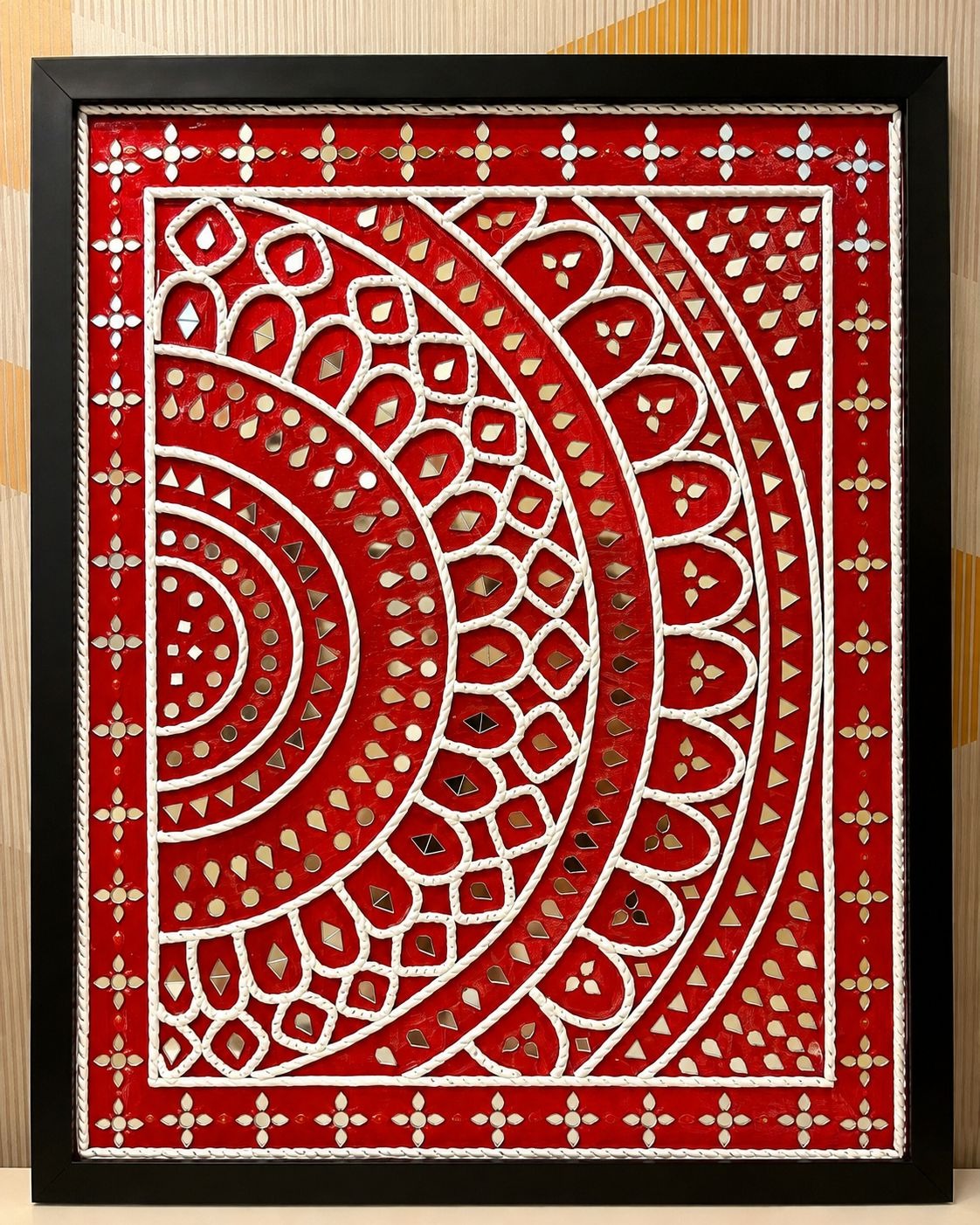
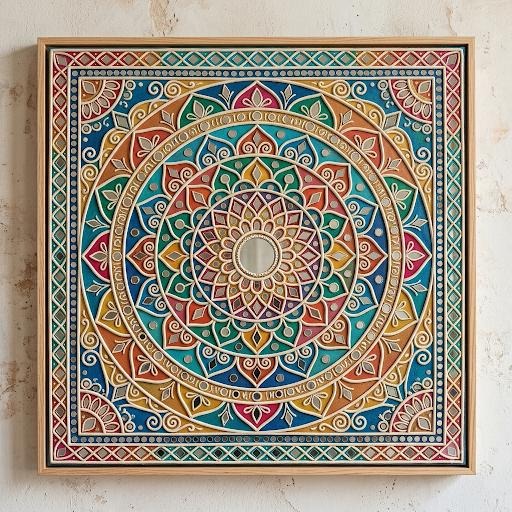
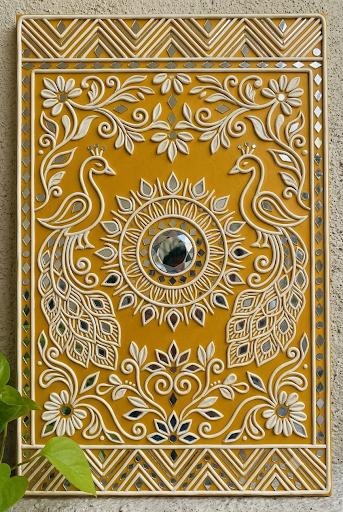
The term 'Lippan' translates literally from Gujarati to English as 'smearing,' 'coating,' or 'plastering.' In rural Kutch, women would coat the walls and floors of their homes with a protective mixture of local clay and animal dung. Over generations, this utilitarian plastering evolved into Chittar Kaam—the rhythmic sculpting of raised clay relief outlines into intricate mandalas, birds, trees of life, and celestial geometries embedded with hand-cut mirror tesserae (aabhla).
Why Was Lippan Art Historically Created Inside Kutch Bhungas?
In the Great Rann of Kutch, where summer temperatures regularly surpass 48 degrees C (118 degrees F) and winter nights drop toward freezing, local communities constructed cylindrical mud dwellings called Bhungas. The thick mud and dung walls offered natural thermal insulation against extreme desert weather. Inside these dark, windowless earthen homes, a single oil lamp (diya) placed near the wall would catch the hand-set mirrors, multiplying tiny points of light into a luminous, star-like glow that illuminated the entire room without soot or excess heat.
Which Communities and Tribes Pioneered Lippan Kaam?
Lippan art was pioneered primarily by the pastoral and artisan tribes of the Banni region in Kutch: the Rabari, Marwada Meghwal, and Mutwa communities. Rabari women, famed for their nomadic embroidery traditions, translated their textile needlework patterns—geometric borders, concentric ripples, peacocks, and grain motifs—directly onto earthen walls. The craft was handed down matrilineally from mother to daughter as an intimate domestic ritual of blessing and architectural devotion.
Traditional Tribal Lippan vs. Contemporary Studio Lippan Art
While traditional village Lippan art was applied directly to interior mud plaster using camel dung and river clay, contemporary architectural studios have adapted the craft for modern luxury residences. Studio pieces retain authentic hand-rolled relief techniques while utilizing engineered marine-grade plywood and non-degrading mineral binders to resist coastal humidity.
| Characteristic | Traditional Tribal Lippan (Kutch) | Contemporary Studio Lippan (Soulfulart) |
|---|---|---|
| Base Substrate | Directly on mud-and-straw Bhunga walls | Moisture-sealed marine-grade plywood or teak |
| Binding Medium | Cow/camel dung, husk, and wild clay | Refined marble dust, chalk compound & polymer resin |
| Mirrors (Aabhla) | Hand-broken convex mirror shards | Precision hand-cut diamond, teardrop & circular mirrors |
| Color Palette | Natural terracotta brown or chalk white | Pristine white, ivory, 24K gold leaf, and charcoal base |
| Moisture Resistance | Sensitive to direct water and monsoon damp | Sealed with non-yellowing acrylic barrier for Indian humidity |
| Portability | Fixed immovably to architectural walls | Framed, hangable gallery panels with heavy-duty anchors |
Is Lippan Art Good for Vastu Shastra and Modern Interiors?
According to Vastu Shastra, mirrors placed thoughtfully on the North and East walls attract positive cosmic energy (Prana) and amplify abundance. Because Lippan art unites the sacred earth element (Prithvi) with the reflective, light-multiplying energy of mirrors, it is widely recommended by modern interior designers and Vastu consultants as a spiritually harmonious focal point for entrance foyers, puja rooms, and living areas.
The Contemporary Atelier: Rachna Saxena's Practice in Mumbai
At Soulfulart (established in Mumbai since 2021), artist Rachna Saxena honors the quiet mindfulness of Kutch artisans. Rather than relying on industrial stencils or mass-molded plastic shortcuts, each panel is built freehand from a single center point. The raised relief lines are rolled with palm precision, creating tactile wall sculptures that balance ancient Indian heritage with sleek contemporary minimalism.
Frequently Asked Questions
Common Questions Answered
Have a question about this piece or custom commissions?
Speak directly with artist Rachna Saxena at her Mumbai atelier.
Studio Catalog