Preserving & Hanging Heavy Handcrafted Relief Art: The Complete Collector's Handbook
Rachna Saxena
Contemporary Lippan Artist · Mumbai Studio
Quick Summary / Direct Answer
Handcrafted Lippan relief artwork combines structural wooden substrates, refined mineral polymer dough, and hand-cut glass mirrors into an heirloom architectural piece. Preserving its tactile beauty requires secure wall anchoring suited to your wall substrate, displaying without reflective glass to maintain natural light refraction, maintaining stable indoor ambient humidity, and performing gentle dry dusting with soft natural bristle brushes. With proper care, a well-sealed Lippan panel will retain its lustre for decades.
The Material Anatomy of Authentic Studio Relief Art
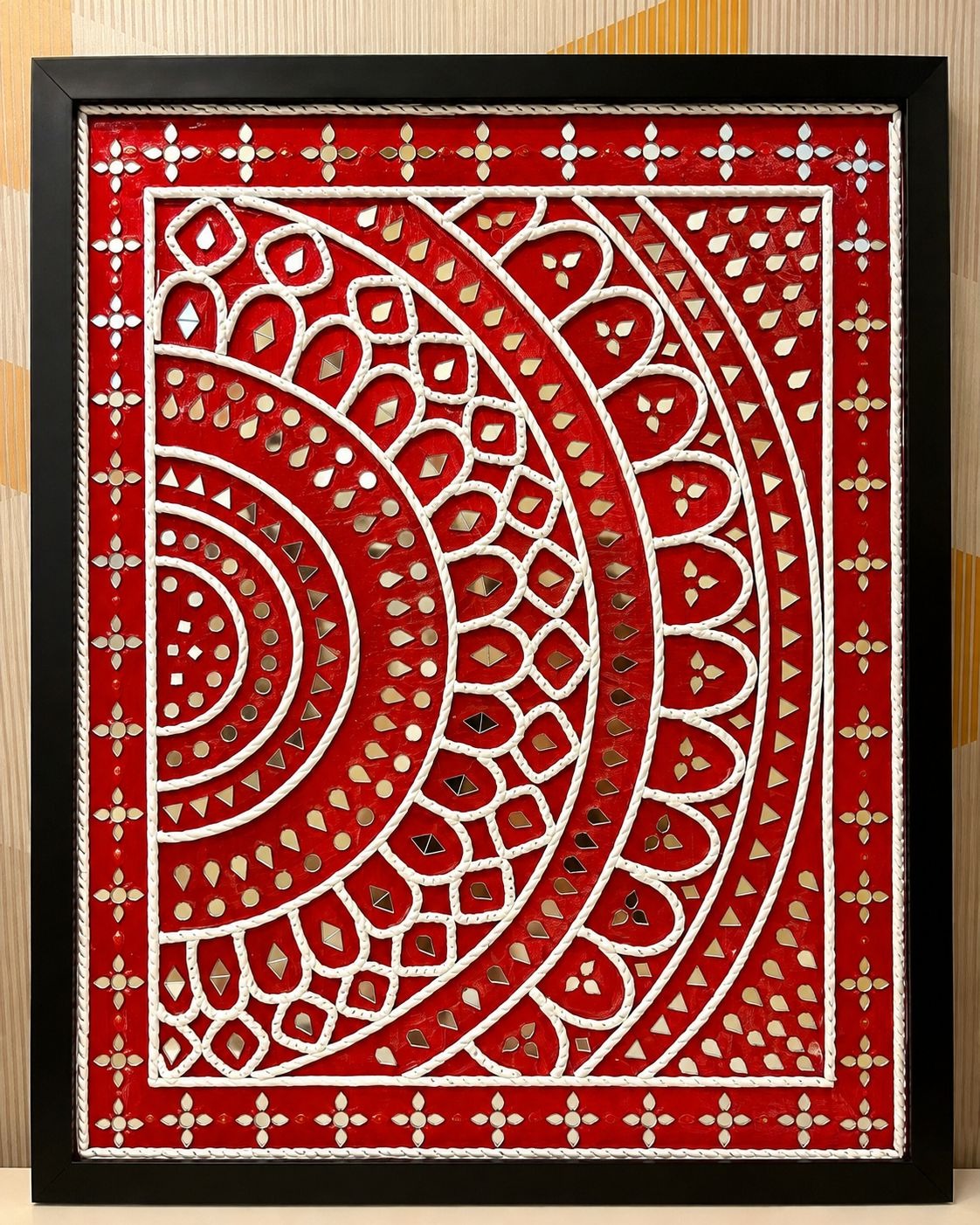
Authentic contemporary Lippan art created at Soulfulart represents a modern structural evolution of the ancient Kutch vernacular craft. Unlike transient desert mud walls, modern studio works are built upon moisture-sealed marine-grade plywood bases engineered to resist dimensional shifting. Upon this foundation, artist Rachna Saxena hand-sculpts intricate raised contours using a proprietary mineral dough composed of fine marble dust, chalk powder, and flexible polymer binders. Hand-cut, silver-backed glass mirrors (aabhla) are embedded into the damp relief matrix, followed by multi-layer acrylic protective sealing that locks out moisture and dust.
Open Display vs Glass Encasement: Why Three-Dimensional Relief Breathes Open
Collectors frequently ask whether a three-dimensional clay-and-mirror artwork should be framed behind protective glass. Curators and conservators overwhelmingly recommend open display. The artistic soul of Lippan art lies in its tactile, sculptural topography—the play of natural raking shadows cast by raised clay outlines and the uninhibited reflection of light across tilted glass facets. Glass sheets introduce distracting glare, trap internal micro-condensation in humid climates, and flatten the visual depth. Because every studio panel is thoroughly sealed with non-yellowing archival sealants, open display remains the superior aesthetic and curatorial choice.
How to Securely Mount and Anchor Handcrafted Panels on Diverse Wall Types
Because authentic relief panels are crafted upon solid architectural-grade wooden substrates with genuine glass mirrors, each piece possesses substantial artisanal weight. Secure mounting begins with evaluating your wall composition. On solid masonry, brick, or concrete walls, heavy-duty nylon expansion plugs paired with brass mounting screws provide unyielding support. On hollow drywall or gypsum partitions, screws must be anchored directly into wooden wall studs or secured using heavy-duty hollow-wall toggle anchors. Every artwork leaves the studio fitted with robust recessed brass D-ring brackets, and custom hanging guidance is confirmed with each client based on their specific wall type.
Preserving Relief Art Across Seasons: AC Humidity, Coastal Air & Central Heating
Handcrafted relief panels thrive in stable indoor residential conditions. In tropical coastal regions (such as Mumbai, Chennai, Goa, or Dubai), high seasonal humidity is kept at bay by the panel's multi-layered moisture barriers. In temperate or cold international climates (such as the United States, United Kingdom, or Canada), indoor winter radiators and central heating create dry air. To ensure longevity, avoid hanging relief art directly above active heating registers, radiator units, or directly in the continuous draft of air-conditioning vents, which can cause uneven localized temperature shifts.
Step-by-Step Collector Care: Routine Dusting & Minor Mirror Restoration
Maintaining the pristine, gallery-fresh brilliance of your Lippan panel requires only minimal, gentle attention. Once every two to three weeks, dust the surface using a soft, dry cosmetic powder brush or a camera-lens air blower to gently lift dust from intricate clay grooves without scratching the mirror silvering. Never spray household glass cleaners or chemical aerosols directly onto the panel. If an individual mirror facet ever becomes smudged, a cotton swab lightly dampened with water or isopropyl alcohol safely cleans the glass. In the rare event of accidental impact, detached mirror facets can be secured with a microscopic drop of clear craft adhesive.
Long-Term Conservation Matrix: Environmental Conditions & Care Protocols
Following standard museum conservation protocols ensures that handcrafted relief artwork endures as a multi-generational heirloom. The matrix below outlines ideal environmental thresholds and preventative care routines.
| Environmental Factor | Optimal Living Condition | Potential Environmental Risk | Preventative Care Protocol |
|---|---|---|---|
| Direct Sunlight & UV | Ambient or indirect room light | Prolonged intense solar rays may degrade adhesives over decades | Hang away from unshaded South- or West-facing exterior glass windows |
| Indoor Humidity | Normal indoor ambient humidity (40%–65%) | Extreme standing moisture or direct water exposure | Keep in covered living areas; never hang in open unsheltered patios |
| Cleaning Routine | Dry, soft bristle dusting every 2–3 weeks | Abrasive scouring pads or liquid chemical glass cleaners | Use soft cosmetic brush; avoid water-drenching or solvent sprays |
| Wall Substrate | Solid masonry or reinforced stud anchors | Undersized adhesive strips or temporary stick-on hooks | Use studio-provided brass D-rings with appropriate wall anchors |
| Seasonal Changes | Gradual room-temperature acclimatization | Thermal shock from sudden exposure to winter heating registers | Allow newly delivered packages to adjust to indoor climate before mounting |
Frequently Asked Questions
Common Questions Answered
Have a question about this piece or custom commissions?
Speak directly with artist Rachna Saxena at her Mumbai atelier.
Studio Catalog