Lippan Art Motifs Explained: Peacocks, Camels, Elephants & What They Symbolize
Rachna Saxena
Contemporary Lippan Artist · Mumbai Studio
Quick Summary / Direct Answer
Traditional Lippan art motifs draw from the pastoral ecology of Kutch and sacred Vedic geometry. Common motifs include the Peacock (Mor) symbolizing grace, beauty, and monsoon rain; the Camel (Oont) and Elephant (Haathi) representing endurance and royal majesty; the Tree of Life (Kalpavriksha) symbolizing family lineage and eternal protection; and concentric radial circles representing the universal cosmic center (Bindu). Contemporary artists often reinterpret these ancestral symbols for modern luxury interiors.
The Peacock (Mor): Symbol of Grace, Rain & Divine Love
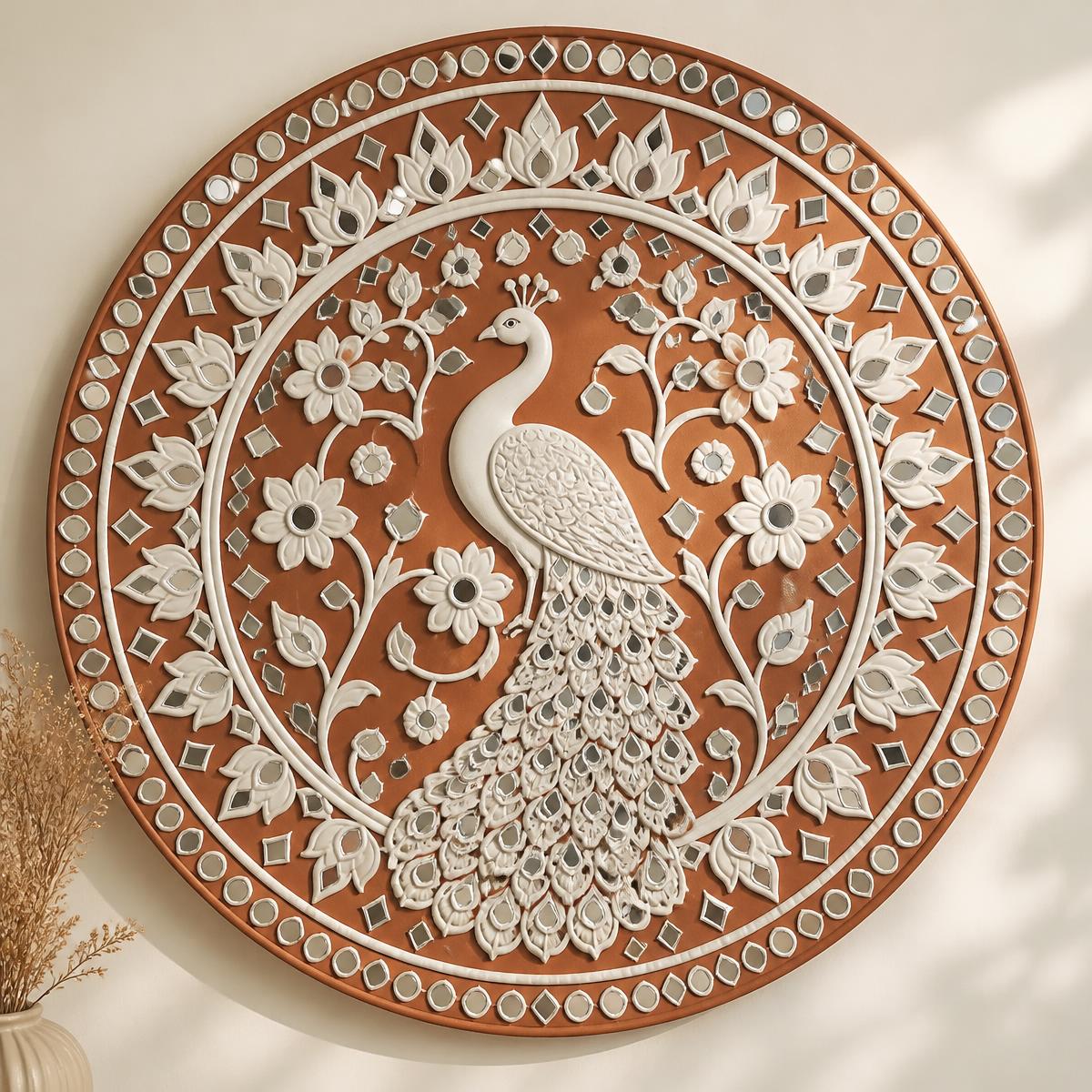
In the arid desert of Kutch, the peacock's call heralds the arrival of life-giving monsoon clouds. Within Lippan art, the peacock is the most revered avian motif, symbolizing renewal, elegance, and protection against negative omens. Stylized peacocks often feature teardrop mirrors outlining their magnificent plumage, arranged in mirrored symmetry facing the home's interior.
The Tree of Life (Kalpavriksha & Jharokha)
The Kalpavriksha, or wish-fulfilling sacred tree, is sculpted as a central trunk branching out into symmetrical leaves and blossoms, each sheltering hand-cut mirror fruit. In Rajasthani and Kutchi havelis, this motif is frequently framed inside an arched Jharokha window, symbolizing safe shelter, ancestral roots, and intellectual growth.
Desert Camels and Elephants: Dignity and Prosperity
The camel represents the survival spirit of desert nomadic tribes—an embodiment of patient endurance and loyalty. The royal elephant, often depicted in welcoming postures near doorways, represents Ganesha's blessings of wisdom, stability, and unyielding financial abundance.
Master Motif & Vastu Meaning Matrix
Each motif carries specific cultural symbolism and ideal placement within a contemporary home:
| Motif Name | Cultural Meaning | Artistic Style | Ideal Home / Room Placement |
|---|---|---|---|
| Peacock (Mor) | Grace, rain, joyous beauty, romance | Curved organic relief with teardrop mirrors | Living room focal wall, master suite |
| Tree of Life (Jharokha) | Ancestral protection, abundance, grounding | Architectural arched frame with leaf tesserae | Dining room, library, formal reception |
| Elephant (Gajraj) | Royalty, wisdom, remover of obstacles | Stately silhouette with floral saddle relief | Main foyer facing inward, home office |
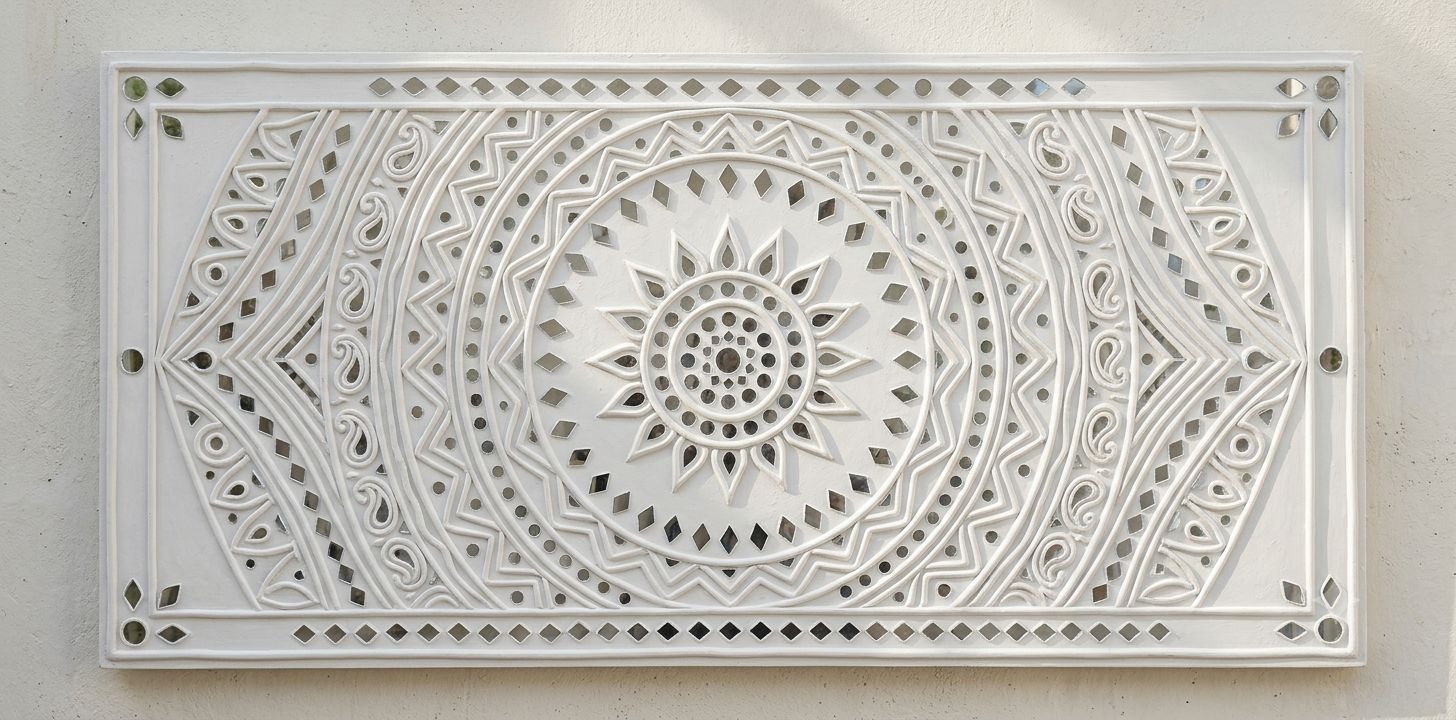
| Sun / Radial Disc (Surya) | Vitality, leadership, masculine energy | Concentric rays radiating from central mirror | East-facing entryway, study area |
| Lotus / Medallion (Padma) | Purity, spiritual awakening, calm | Circular floral symmetry with diamond petals | Pooja room backdrop, meditation corner |
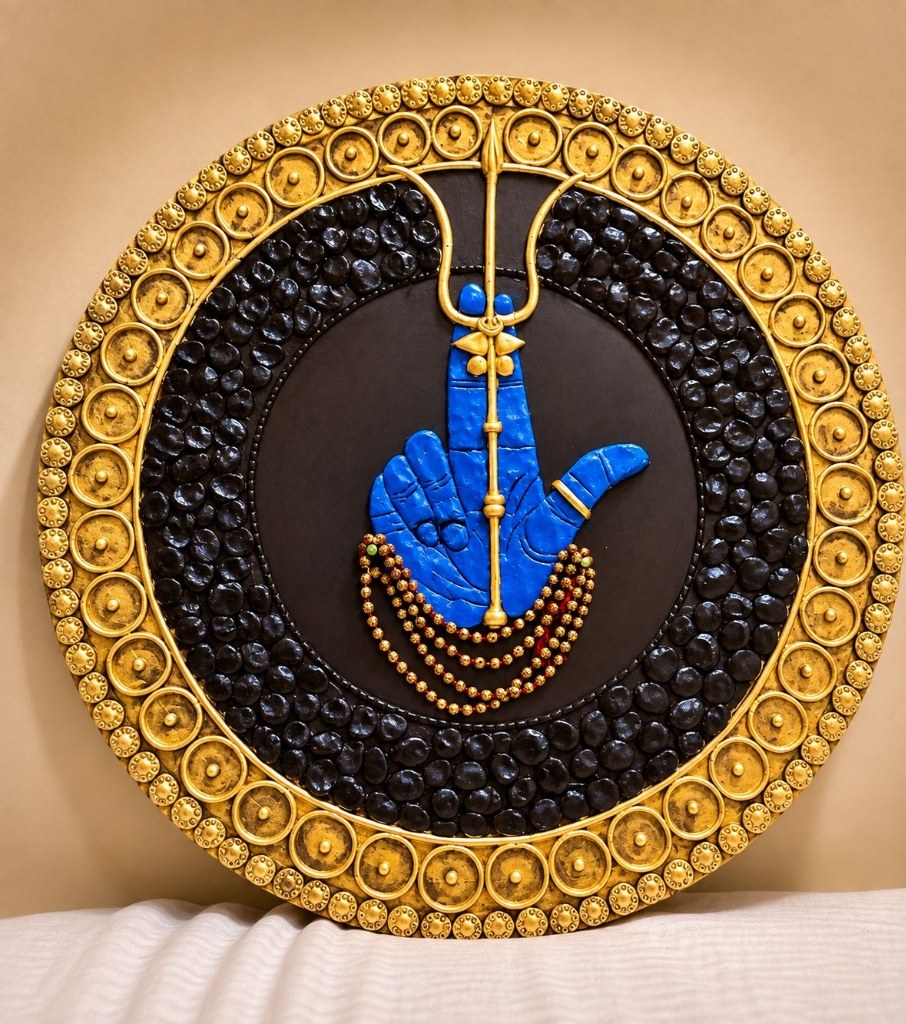
| Divine Trishul & Om | Cosmic balance, inner stillness, divine grace | Sacred weapon and mudra in gold & ivory | Mandir wall, peaceful sanctum |
The Cosmic Bindu: Geometric Symmetry in Modern Decor
Beyond figurative animals, pure geometric Lippan art utilizes concentric circles and diamond grids originating from a single center point (Bindu). In sacred geometry, the Bindu represents the source of creation and infinite consciousness. In a high-ceilinged modern living room, these radial patterns anchor the eye and introduce an aura of meditative stillness.
Frequently Asked Questions
Common Questions Answered
Have a question about this piece or custom commissions?
Speak directly with artist Rachna Saxena at her Mumbai atelier.
Studio Catalog