Lippan Art for Modern Luxury Interiors: Vastu Placement, Lighting & Sizing Guide
Rachna Saxena
Contemporary Lippan Artist · Mumbai Studio
Quick Summary / Direct Answer
Lippan art serves as both an architectural statement and an auspicious energy focal point in contemporary luxury homes. According to Vastu Shastra, positioning Lippan mirror relief murals on North or East walls enhances prosperity, light reflection, and positive prana. For optimal spatial balance, entryway foyers and living room consoles require artwork spanning 60% to 75% of the furniture width, illuminated with directional grazing light (25° to 30° beam angles) to cast sculptural shadows across the handcrafted earthen coils.
What Is the Vastu Shastra Significance of Lippan Mirror Art in Homes?
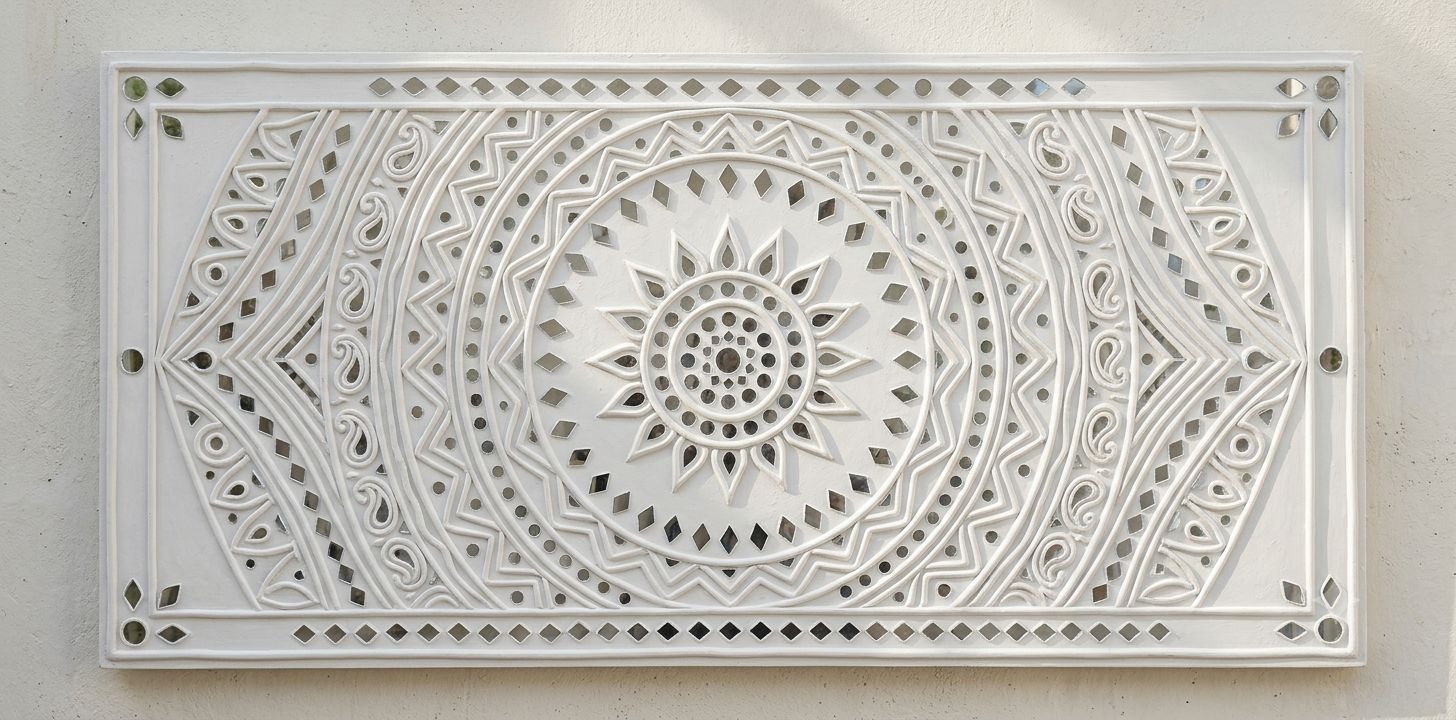
In traditional Indian spatial philosophy, mirrors (aabhla) and sacred earthen clay embody two fundamental elemental forces: Earth (Prithvi) and Space (Akasha). In Vastu Shastra, mirrors are dynamic reflective tools used to capture, double, and redirect vital life energy (prana). When hand-inlaid into geometric clay relief coils, the mirrors act as light-diffusing prisms that dissipate stagnant energy while attracting clarity, abundance, and auspicious blessings. Unlike plain commercial glass mirrors which can reflect harsh glare, Lippan art disperses ambient illumination through hundreds of convex and angled facets, softening the living environment.
Which Wall Directions Are Best for Hanging Lippan Art According to Vastu?
Directional orientation dictates how reflective art influences household harmony. North walls, governed by Kuber (the deity of wealth and opportunity), and East walls, ruled by the rising Sun (Surya) and Indra (clarity and vitality), are the two most beneficial orientations for Lippan panels. Placing a reflective relief panel on a North wall symbolically expands financial horizons and career momentum, whereas an East wall installation revitalizes morning vitality and intellectual calm.
| Wall Direction | Vastu Element & Governing Deity | Recommended Lippan Motifs | Ideal Residential Room Setting |
|---|---|---|---|
| North Wall | Water / Lord Kuber (Wealth & Career) | Radial ripples, flowing geometric borders, peacocks | Entrance foyer, home study, formal reception lounge |
| East Wall | Fire-Sun / Lord Surya (Vitality & Health) | Surya radial mandalas, blooming lotuses, cosmic sunbursts | Dining room feature wall, morning breakfast nook, pooja room |
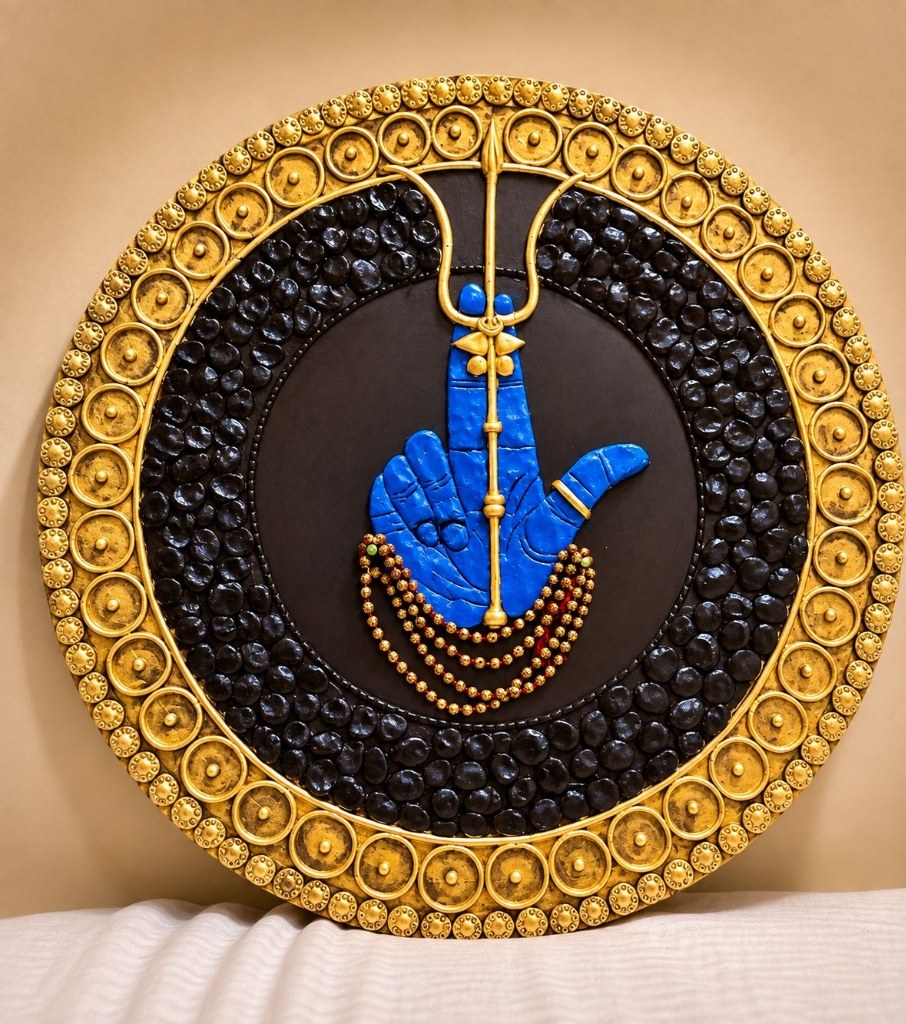
| North-East (Ishanya) | Water-Ether / Spiritual Gateway | Sacred geometry, Trishul relief, meditative mandalas | Pooja room backdrop, meditation corner, quiet reading gallery |
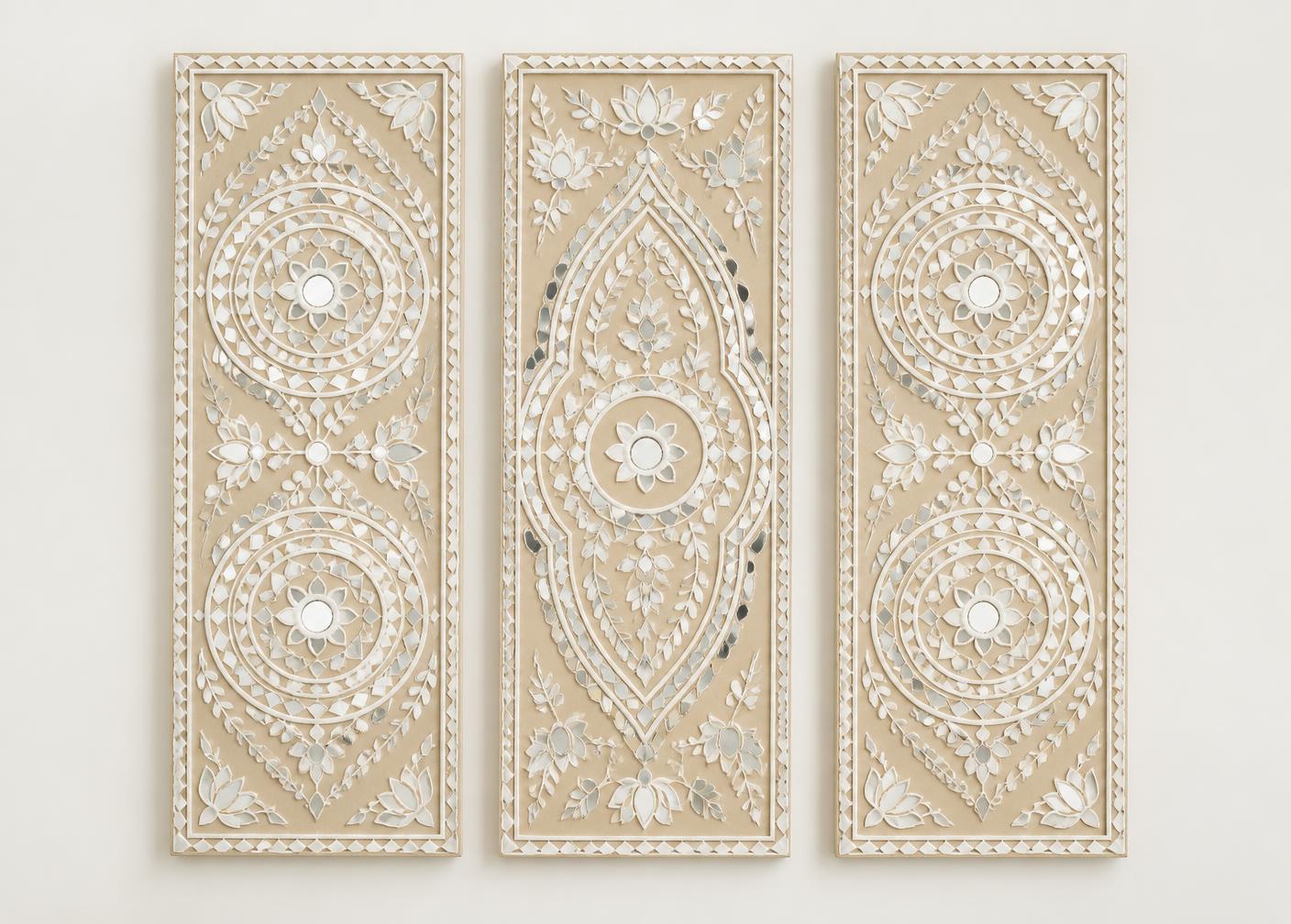
| West Wall | Space / Lord Varuna (Stability & Social Gains) | Concentric medallions, structured triptychs, geometric panels | Living room sofa backdrop, hallway gallery wall |
| South Wall (Caution) | Fire / Lord Yama (Rest & Grounding) | Solid earth tones, minimal mirrors, deep textural relief | Accent wall behind credenza; avoid placing directly facing bed |
How to Size Lippan Wall Art for Foyers, Living Rooms & Dining Consoles
One of the most frequent mistakes interior designers encounter is choosing an artwork that is either dwarfed by a high ceiling or overwhelmed by bulky furniture. A reliable design benchmark is the 'Two-Thirds Proportion Principle': a statement Lippan panel or multi-panel arrangement should span approximately 60% to 75% of the total width of the furniture piece beneath it (such as a foyer credenza, sofa, or dining console). For residences with generous 9-to-11-foot ceiling heights, circular medallions provide organic contrast against rectilinear modern architecture, while vertical triptych sets add architectural height to double-height entrance foyers.
How to Light Lippan Relief Art: Directional Raking Angles vs Flood Lighting
Because authentic Lippan art relies on three-dimensional sculpted clay coils, lighting is fundamental to how the artwork reads in a room. Flat overhead floodlighting tends to 'flatten' the clay contours, rendering the piece as a plain surface. To reveal the dramatic depth of the relief, lighting designers specify 'raking' or 'grazing' light. Installing adjustable ceiling gimbal spotlights positioned 18 to 24 inches from the wall surface at a 25° to 30° angle casts delicate drop-shadows below each sculpted coil while causing the mirror tesserae to shimmer like starlight as family and guests walk past.
Designing Sacred Mandir & Pooja Room Backdrops with Lippan Relief
The pooja room or home mandir is perhaps the most revered architectural space for handcrafted Lippan art. Traditional Kutch motifs—such as the Trishul, Omkar, sacred lotus, Kalpavriksha (Tree of Life), and concentric sacred geometry—transform a plain prayer wall into a serene sanctum. By combining pure white mineral clay dough with selective 24K gold foil leafing, the atelier handcrafts bespoke prayer backdrops that reflect the soft radiance of ghee diyas, creating an atmosphere of profound meditative stillness.
Curating Cohesive Art Walls: Statement Medallions vs Multi-Panel Triptychs
When curating a contemporary living space, collectors typically choose between a single monumental focal medallion or a rhythmic multi-panel series. A standalone circular medallion (such as the Surya or Shivam panels) creates a magnetic central anchor above a low console, drawing the eye inward. Conversely, a vertical triptych (three matched vertical panels spaced 2 to 3 inches apart) introduces architectural rhythm along extended corridor walls or dining areas, allowing light to dance across sequential panels.
Frequently Asked Questions
Common Questions Answered
Have a question about this piece or custom commissions?
Speak directly with artist Rachna Saxena at her Mumbai atelier.
Studio Catalog