How Lippan Art Is Made: Materials, Process & What Makes It Authentic
Rachna Saxena
Contemporary Lippan Artist · Mumbai Studio
Quick Summary / Direct Answer
Authentic Lippan art is crafted through a meticulous multi-stage manual process: priming an engineered wooden base, hand-kneading a flexible mineral relief dough, palm-rolling uniform slender clay coils, sculpting sacred geometric borders freehand, embedding hand-cut glass mirrors with specialized adhesives, and sealing the dried relief with protective non-yellowing acrylic varnishes to prevent cracking and humidity damage. Each stage demands patient hand skill honed over years of daily studio practice.
What Materials Are Used in Authentic Lippan Art?
To withstand urban humidity and indoor climate control without cracking, modern fine art studios employ high-grade materials: (1) Marine-grade Birch or Teak plywood (architectural-grade) treated with waterproof wood primers; (2) Fine mineral clay dough formulated with precipitated chalk powder, marble dust, and polyvinyl binders; (3) Hand-cut silver-backed glass mirrors (aabhla) in geometric shapes (diamonds, circles, teardrops, triangles); and (4) Non-yellowing matte acrylic sealants.
How Do Artists Roll Clay Coils Without Cracking?
The hallmark of a master Lippan artist is the ability to roll continuous, crack-free cylindrical coils (known as 'doris'). Artists knead the dough until it achieves optimal plasticity—neither sticky nor dry. Using the base of the palm against a smooth marble or glass slab, the dough is gently coaxed into uniform slender ropes. Proper moisture retention and slow shade-drying prevent structural cracking.
Step-by-Step Creation: The Soulfulart Atelier Workflow
From raw board to finished wall sculpture, creating a single 24-inch Lippan panel requires between 25 and 45 hours of focused studio work across distinct stages:
| Stage | Atelier Process | Tools & Materials Used | Curing / Drying Time |
|---|---|---|---|
| 1. Base Prep | Precision cut board, edge beveling, and dual-coat moisture sealing | Marine plywood, anti-fungal primer | 24 hours |
| 2. Geometry Mapping | Freehand compass layout from central Bindu; no laser stencils | Architectural dividers, graphite | 3–4 hours |
| 3. Coil Sculpting | Hand-kneading relief dough and rolling continuous slender clay borders | Mineral dough, fine palette knives | 12–18 hours |
| 4. Mirror Inlay | Embedding individual aabhla mirrors into damp relief boundaries | Hand-cut glass mirrors, PVA/epoxy glue | overnight curing |
| 5. Curing & Inspection | Slow climate-controlled drying to eliminate micro-fractures | Ambient drying chamber | 48–72 hours |
| 6. Varnishing | Applying matte or satin acrylic seal to protect clay and polish mirrors | Non-yellowing acrylic clear coat | 24 hours |
How to Identify Authentic Handmade Lippan Art vs. Laser-Cut MDF Kits
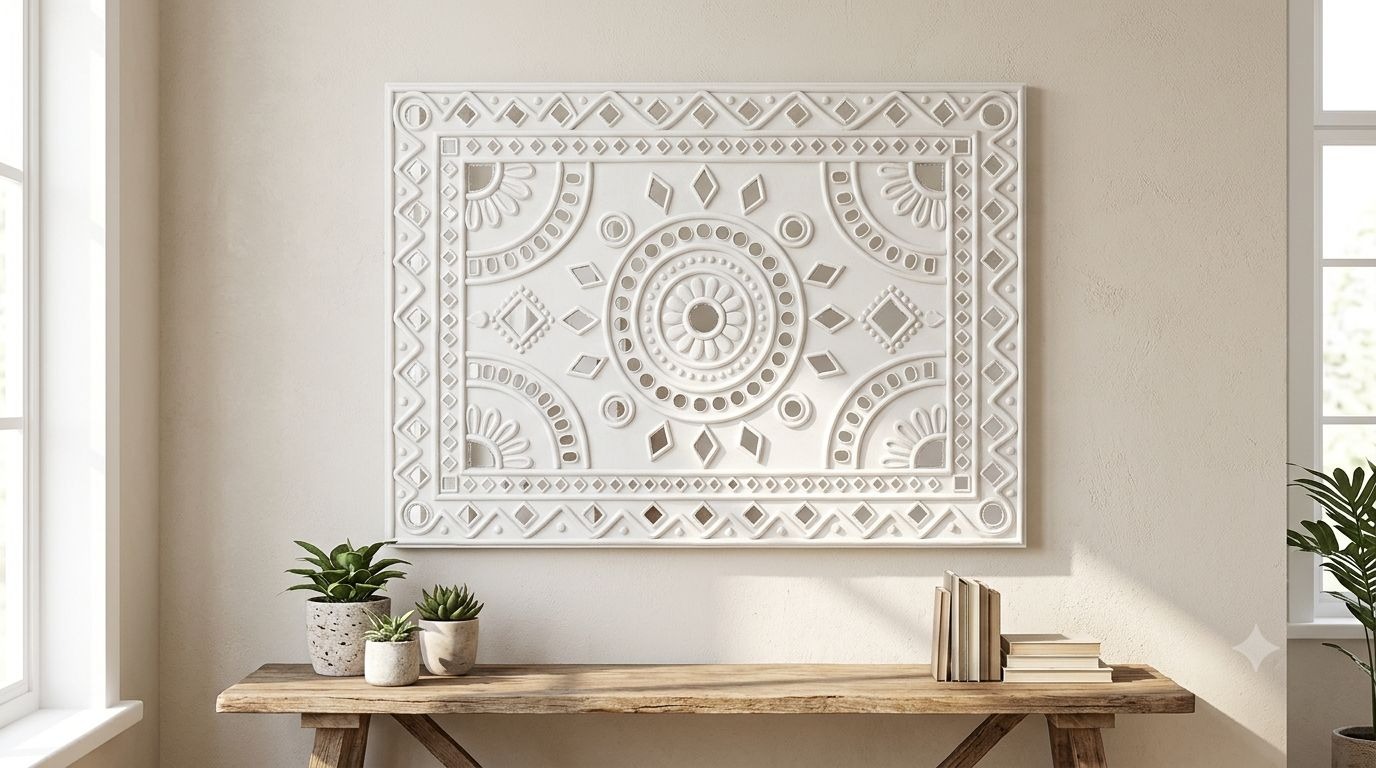
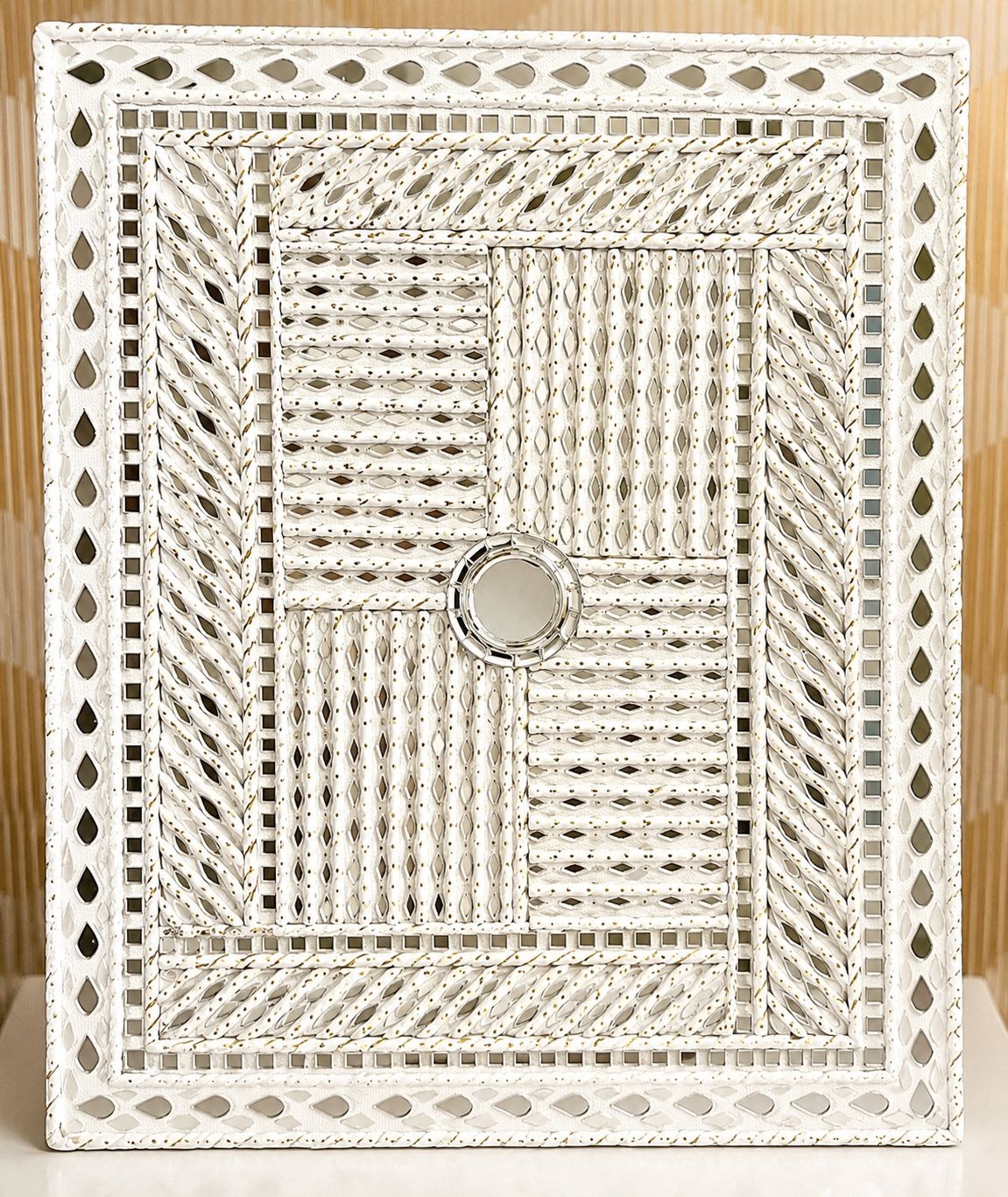
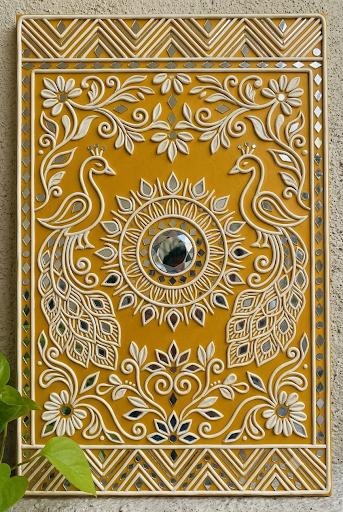
Online marketplaces are flooded with inexpensive laser-cut MDF boards masquerading as Lippan art. Genuine collector-grade Lippan art displays unmistakable characteristics: (1) True three-dimensional rounded relief coils rather than flat laser-burned grooves; (2) Subtle organic variations in coil thickness that prove hand-work; (3) Beveled glass mirrors pressed gently into clay rather than glued onto flat painted wood; and (4) A solid, substantial weight (genuine studio pieces possess substantial artisanal weight).
Why Freehand Relief Trumps Machine Stencils
In mass production, stencils produce robotic, rigid lines that lack artistic breath. In Rachna Saxena's studio, every line is guided by intuition and breath. This freehand technique gives each mandala a living rhythm that responds dynamically to changing natural sunlight throughout the day.
Frequently Asked Questions
Common Questions Answered
Have a question about this piece or custom commissions?
Speak directly with artist Rachna Saxena at her Mumbai atelier.
Studio Catalog